
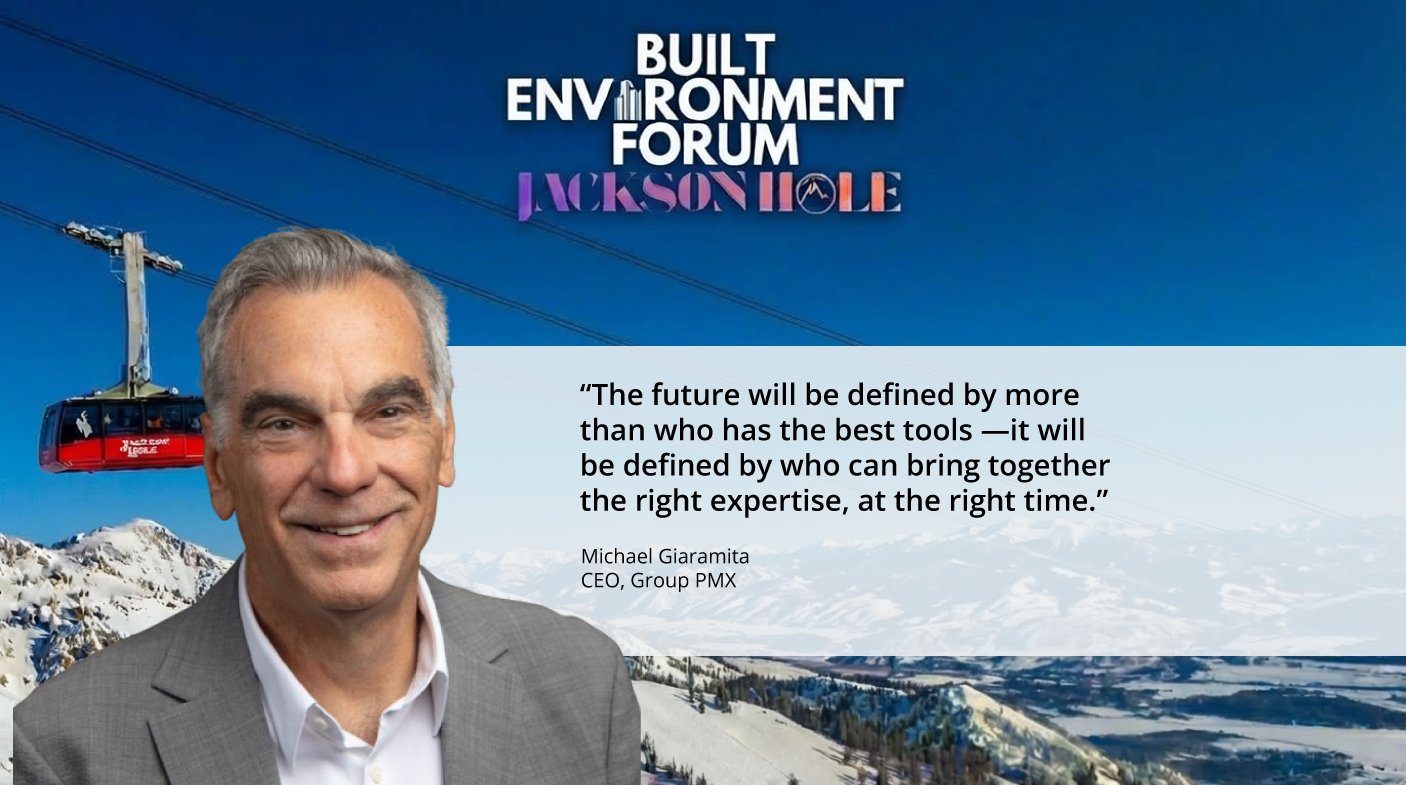
By Michael Giaramita, CEO
At the Build Environment Forum in Jackson Hole, Group PMX CEO Michael Giaramita joined leaders across AEC, development, and technology to discuss where the industry is heading. In this Insight, he shares why the forum’s greatest value wasn’t a single innovation—but the relationships and ecosystem thinking that are forming around it.
Every once in a while, you attend a conference that reminds you why this industry still matters—not just because of what we build, but because of how we build and who we build it with.
The Built Environment Forum in Jackson Hole was one of those moments.
Yes, there were presentations. Yes, there were innovations. And yes, there was plenty of discussion about technology. But what stood out most to me was something bigger than any single product or idea: the emergence of a community that is starting to function like an ecosystem.
The Most Valuable Work Happened Outside the Meeting Room
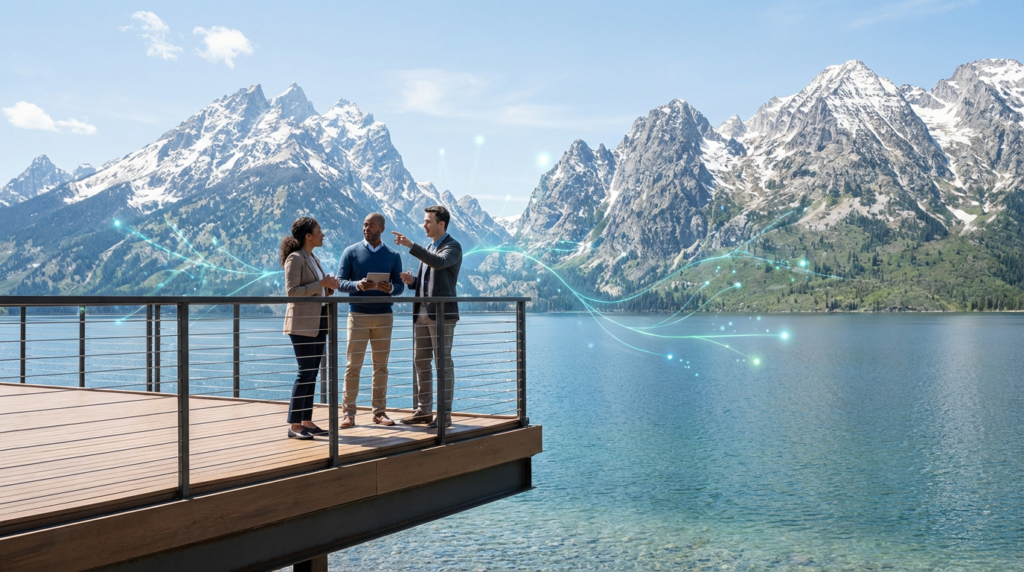
The forum’s structure was unique. Each day included several hours of formal discussion—followed by time intentionally set aside for social interaction. People skied together, ate together, and spent time in real conversations that didn’t feel forced or transactional.
That may sound like a small detail, but in my experience, it’s the difference between exchanging business cards and building trust.
And trust is where real value starts.
A Room Full of Expertise—And the Beginning of Something Larger
What struck me most was the diversity of capabilities represented in one place. You had people and firms across architecture, engineering, construction, development, project management, technology, and innovation—many of whom have already worked together in different combinations.
At first glance, the forum appears to be an information-sharing event. But if you look a little deeper, you start to see something else forming: a network of relationships that could evolve into something far more powerful than individual firms operating in silos.
That’s what I mean by ecosystem.
Learning Before Monetization
Here’s the truth: the forum was not about closing deals.
It wasn’t designed as a pitch-fest or a marketplace. In fact, that’s what made it valuable. People were candid. They shared what they were building, what they were struggling with, and what they were still trying to figure out. They asked real questions. They offered ideas. They compared notes.
In a world where everything is expected to produce an immediate ROI, it was refreshing to be in a room where the priority was learning.
But learning doesn’t mean the business case isn’t there. It means the business case is still forming.
For a deeper look at the technology and innovation themes discussed at the forum—from workforce constraints to practical AI use cases, read Group PMX Director of Technology Eddie Cardozo’s Insight: “What Innovation in the Built Environment Actually Looks Like Right Now.”
Why Ecosystem Thinking Matters
In our industry, we often assemble project teams on the fly. We build partnerships one contract at a time. We introduce new technologies one pilot at a time. That’s the default.
But imagine the advantage of an integrated delivery team that already knows how to work together—a group of organizations that understand each other’s strengths and can align early around mission, delivery, and outcomes.
That kind of ecosystem isn’t built overnight. It’s built through repeated interaction, trust, and shared learning. And if it’s done well, the whole becomes greater than the sum of its parts.
From an owner’s perspective, ecosystem thinking isn’t philosophical—it’s practical. When teams already understand how to work together, projects benefit from faster alignment, fewer handoffs, and earlier risk identification. Decisions happen with more context, issues surface sooner, and accountability is clearer. The result is not just better collaboration, but improved predictability around cost, schedule, and outcomes—especially on complex projects where fragmentation creates real risk.
A New Kind of Competitive Advantage
At Group PMX, this way of thinking reinforces how we approach delivery—bringing the right expertise together early, aligning teams around shared objectives, and creating the conditions for projects to perform better over time.
The future of the built environment won’t be defined only by who has the best tools. It will be defined by who can bring together the right expertise, at the right time, with the right alignment.
Events like this forum are an early signal that the industry is beginning to shift. Not away from competition—but toward a more collaborative, ecosystem-driven approach where innovation is accelerated through relationships.
At GroupPMX, we’ve always believed that project success depends on more than schedules and budgets. It depends on people, trust, and execution.
Jackson Hole reinforced that.
And I believe we’re still early.
Take your next project
to new heights.
Wherever you are with your next project, we’ll help you move forward, faster than ever.