
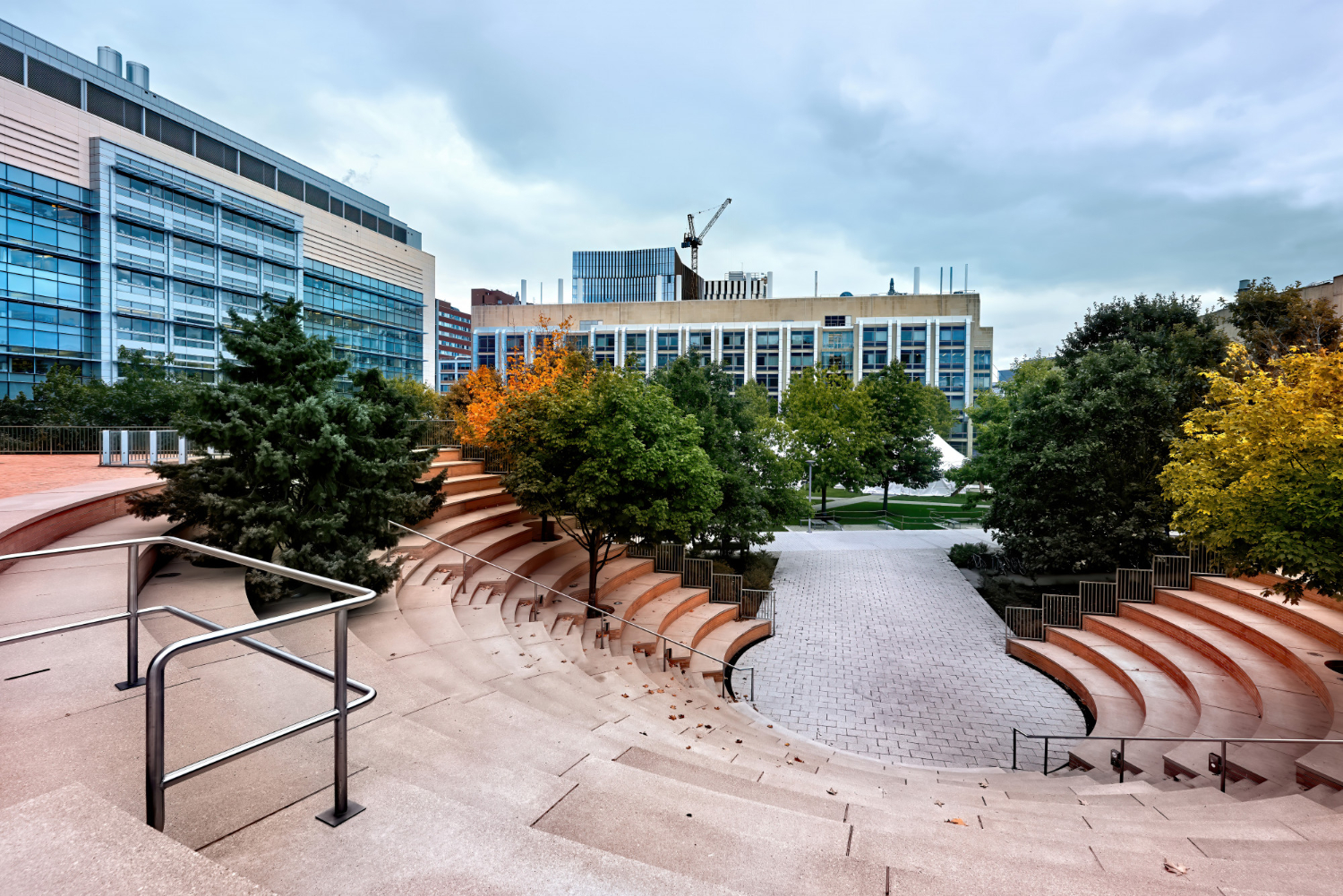
Insights from the Bisnow Higher Education Summit
Group PMX was proud to participate in the Bisnow Higher Education Summit on December 4 at New York Law School, joining leaders from higher education, planning, design, and energy to discuss how urban campuses are adapting to rapidly evolving academic, financial, and sustainability demands.
As institutions continue to reassess capital priorities amid shifting enrollment, aging infrastructure, and ambitious decarbonization goals, the themes explored at the Summit remain highly relevant heading into 2026 and beyond.
Contributing to the Conversation on Urban Campus Futures
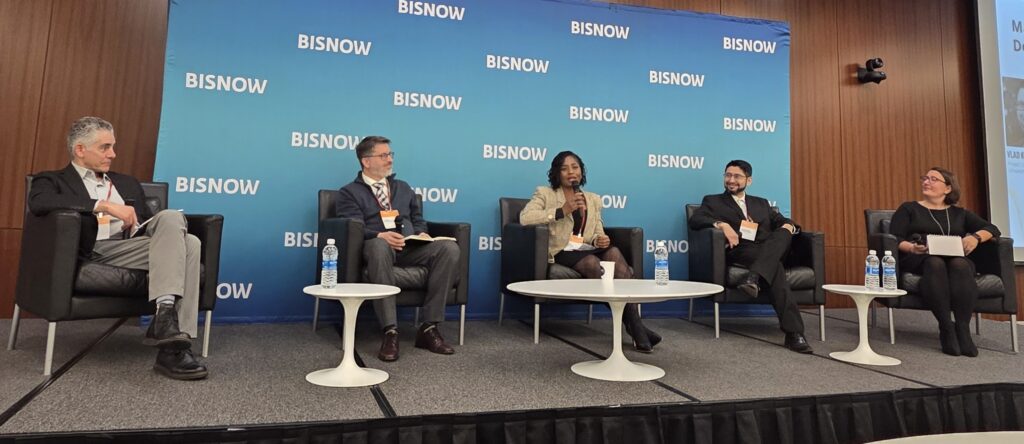
Danei Wallen, Senior Project Manager at Group PMX, served as a panelist on “Mapping the Future of Urban Campus Development & Design,” alongside representatives from Pace University, Fordham University, Sasaki, Brightcore Energy, and Kohler Ronan.
The panel explored how universities are planning, renovating, and investing in their campuses—particularly within the constraints of dense urban environments—while aligning facilities with institutional mission, student experience, and long-term resilience.
Strategic Planning in a Complex Environment
Key pressures facing today’s campuses included:
- Limited space and high development costs in urban settings
- Demand for flexible, collaborative, and technology-enabled learning spaces
- Aging building stock and deferred maintenance
- Institutional commitments to sustainability and decarbonization
- The need for stronger community and industry partnerships
Panelists emphasized that successful campus planning now requires a holistic, data-informed approach that balances near-term needs with long-term adaptability.
Evaluating Existing Assets and Designing for Flexibility
Drawing from her work at Group PMX, Danei Wallen shared insight into how institutions are making strategic decisions about whether to renovate, repurpose, expand, or retire existing facilities. She highlighted the value of frameworks such as Multi-Criteria Decision Making (MCDM) to evaluate program needs, infrastructure conditions, costs, and long-term value.
In New York City, where adaptive reuse is often essential, she discussed the opportunities and challenges of transforming legacy academic and commercial buildings into future-ready learning environments—emphasizing phased planning, resilient infrastructure, and intentionally flexible layouts.
Themes Shaping the Campus of Tomorrow
The discussion underscored several trends influencing higher education development:
- Active and experiential learning environments that support collaboration and hands-on engagement
- Technology as a space enabler, allowing challenging or historic buildings to function as high-performance learning environments
- Evolving residential models, including living-learning communities that enhance student engagement and retention
- Early integration of energy and sustainability planning, with electrification and district-scale strategies shaping capital decisions
Looking Ahead
The Summit reinforced a shared vision for the future of higher education campuses: adaptable, sustainable, technologically robust, and deeply connected to their communities.
Group PMX is proud to contribute to these critical conversations and to support higher education partners as they plan, modernize, and invest in environments that advance learning, research, and long-term institutional resilience.
Date
January 15, 2026
Categories
Take your next project
to new heights.
Wherever you are with your next project, we’ll help you move forward, faster than ever.