
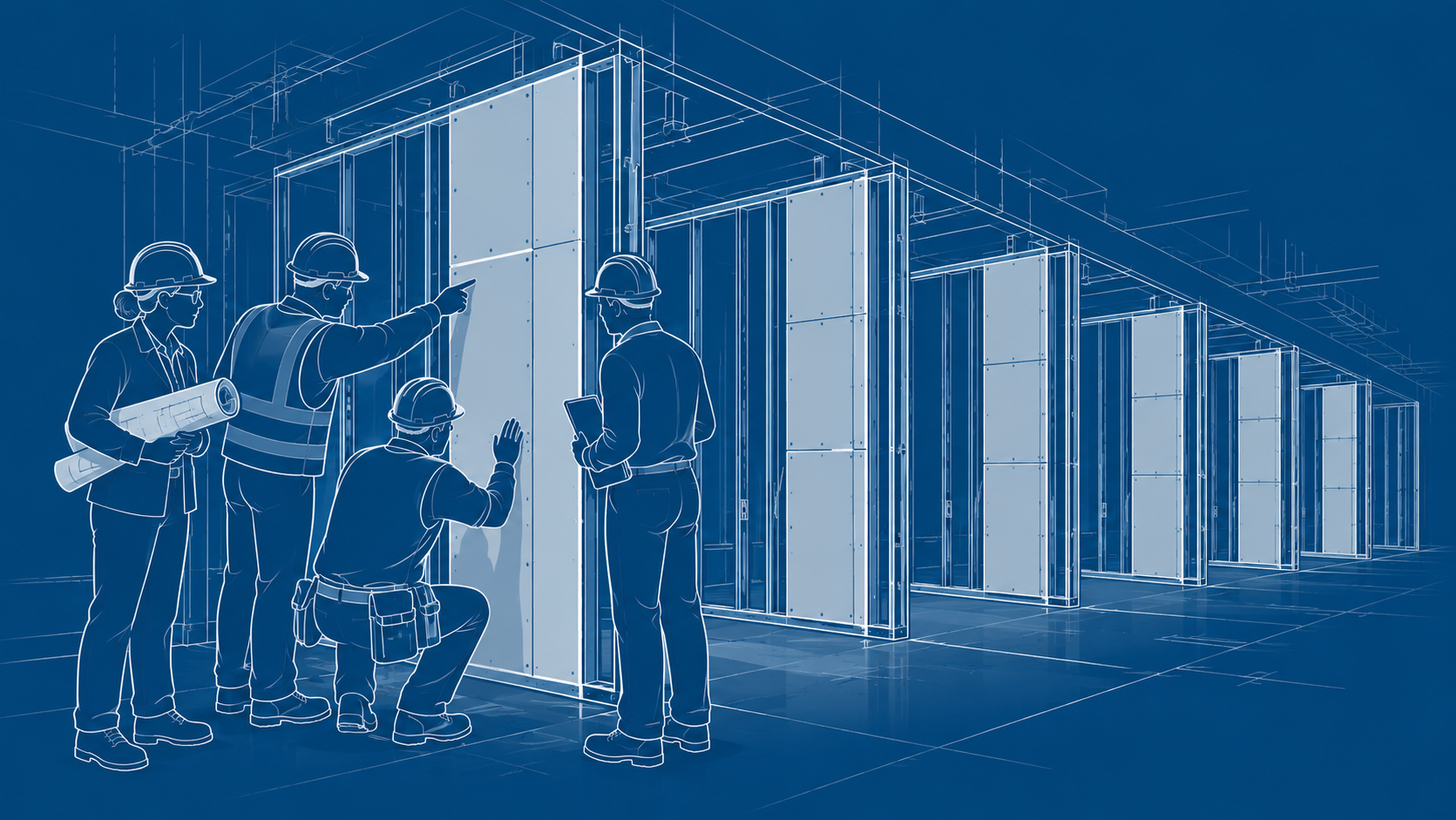
Group PMX CEO Michael Giaramita shares why catching problems early, setting clear standards, and getting work right the first time can improve quality, schedule, and overall project performance.
Construction is sequential and repeatable.
One activity follows another. One trade’s finish becomes another trade’s start. And within that sequence, we repeat many of the same activities over and over again.
That creates both an opportunity and a risk. If we’re doing something right, we can repeat it. But if we’re doing something wrong, we can repeat that, too.
That’s why one of the simplest ways to improve project performance is to pay attention to what’s happening the first time. If the first installation isn’t right, stop, figure out why, and fix it. Don’t build 50 more and put them on a punch list.
Quality Should Be Built Into the Work
We tend to accept punch lists as just part of construction. I’ve always questioned that. Why should we wait until the end of a project to identify work that could have been corrected during installation?
Of course, there will be closeout items. Projects are built by people, and nothing is going to be perfect. But there’s a big difference between a normal closeout and allowing the same deficiency to recur because nobody stopped it early.
It can be something as simple as an outlet cover being installed crooked. If you see it on the first one, say something. You don’t need to embarrass anybody or turn it into a confrontation. Just get it right.
Construction is repeatable. Once people understand the standard, good work can repeat just as easily as bad work.
“Right the First Time” Isn’t Just About the Trades
When we talk about getting it right the first time, it can sound like we’re talking only about workmanship. We’re not.
The PM and CM have responsibilities. The architect and engineer have responsibilities. The superintendent has responsibilities. The contractor and trades have responsibilities. Everybody’s work creates the conditions for somebody else’s work.
For the PM or CM, getting it right means establishing expectations, making decisions, making sure people have the information they need, and removing obstacles before they affect the work. For the architect and engineer, it means staying engaged as the design becomes a physical installation. For the superintendent, it means identifying a problem the first time it appears—not after it has become a pattern. And for the trades, it means understanding the required outcome rather than simply completing an assigned task.
I once walked on a project where a tile installer was putting in a bottom row of tile that was visibly different from the tile above it. It was a different size and a different color, so I asked whether it was the right tile.
His response was essentially: I don’t know. I just get paid to lay tile.
That’s exactly the mindset we need to avoid. If something obviously doesn’t look right, stop and ask the question. A few minutes spent checking can save hours or days of removing and replacing completed work.
Make the Standard Clear
Getting it right the first time doesn’t mean demanding perfection and blaming somebody every time something goes wrong. It means making sure people understand what is expected and giving them the information and resources they need to achieve it.
I saw that on a project where there were constant disagreements over Level 5 gypsum-board finishes. The architect was generating many punch-list items, while the trade believed the work met the required standard. Everybody was frustrated, so we brought in an industry association that specialized in that work.
Importantly, we didn’t just educate the trade. The industry experts also helped the architect understand how the finish should be evaluated, so both sides were looking at the work using the same standard. The number of punch-list issues dropped dramatically.
We didn’t lower the quality requirement. We made the requirement clear.
Sometimes the best thing a PM or CM can do isn’t tell somebody they’re wrong. It’s bringing in the information or expertise that allows everybody to get it right.
Keep the Designer Engaged in the Field
That’s also why I believe architects and engineers should be in the field regularly. I want the people who drew the work to see how it is actually being built.
If something isn’t consistent with the design intent, identify it while the trade is still able to address it efficiently. If a detail doesn’t work the way everybody expected, get the designer, contractor, and trade together and figure it out—before the work is covered and long before the punch list.
And don’t assume that because something is shown on a drawing, everybody interprets it the same way. Construction gives us opportunities every day to check the work, learn, and adjust. We should use them.
Accountability Without Blame
Getting it right the first time also depends on how the team responds when something isn’t right.
Accountability matters. If work doesn’t meet the required standard, it needs to be corrected. But accountability doesn’t have to mean assigning blame, embarrassing someone, or turning every issue into a confrontation. In my experience, that can make people more defensive and less likely to raise the next problem early.
I’d rather create an environment where people are comfortable saying, Something doesn’t look right here. Let’s check it.
That’s particularly important in construction because the person who spots a problem may not be the person who caused it—or the person responsible for solving it. What matters in that moment is that someone raises the issue before the work continues and the problem becomes harder and more expensive to correct.
Good tradespeople take pride in their work, and good project leaders respect that. Set clear expectations, address problems directly, and give people the opportunity to correct them. We’re trying to get the work right, not win an argument.
Getting It Right Is Also a Schedule Strategy
Quality is only part of the equation. Getting it right the first time also protects time.
If construction is sequential, one person’s delay can quickly become somebody else’s delay. The wall can’t close until the work inside it is complete. The finishing trade can’t begin until the preceding work is ready. Commissioning can’t proceed until the systems are installed and functioning. Rework interrupts that sequence and can affect activities well beyond the work being corrected.
That’s why I like teams to focus on early-start and early-finish dates. There is real value in finishing work earlier: the contractor can bill sooner, the next trade can start sooner, and the project creates some breathing room rather than using it up.
When people understand that, something interesting begins to happen. The downstream trade starts asking the trade ahead of it: What do you need to finish? Can I help you get there? If you finish earlier, I can start earlier.
Now the schedule isn’t just the CM’s document. People begin to understand how their individual performance affects everyone around them. That’s healthy peer pressure—and, more importantly, it’s teamwork.
Stop Problems Before They Become Patterns
Project teams solve complicated problems every day, but sometimes we make construction more complicated than it needs to be.
Look at the first installation. Is it right? Does everybody understand the standard? Does the next person have what they need? Is there an unanswered question? Are we about to repeat something we already know we’ll have to correct?
If there is a problem, deal with it then.
That’s where PMs and CMs can add tremendous value—not simply documenting what happened, but creating the conditions that help the team perform better as the work moves forward.
Because construction is sequential and repeatable. The opportunity is to make sure we’re repeating the right things.
Frequently Asked Questions: Getting It Right the First Time
What does “getting it right the first time” mean in construction?
It doesn’t mean expecting perfection. It means establishing the required standard early, checking work as it progresses, resolving questions quickly, and correcting problems before they are repeated. The emphasis is on preventing avoidable rework rather than discovering it at the end.
Who is responsible for getting it right—the CM, designer, contractor, or trade?
Everyone has their own responsibilities, but they differ. The designer communicates the intent. The PM and CM establish processes, coordinate information, and remove obstacles. Field leadership identifies problems early. Contractors and trades execute the work and raise questions when something doesn’t look right. Quality is a team responsibility.
How does getting work right the first time affect the schedule?
Rework consumes time and can keep downstream activities from starting. Because construction is sequential, one problem can affect several subsequent activities. Completing work correctly and leaving it ready for the next trade helps maintain flow and gives the project a better chance of gaining time instead of losing it.
Can a project realistically eliminate punch lists and rework?
Probably not completely. But that’s not really the point. The better question is how much avoidable rework the team can prevent. If standards are clear, designers remain engaged, the field team checks work as it progresses, and the first occurrence of a problem is corrected before it repeats, the punch list becomes a closeout tool—not the project’s primary quality-control process.
About the Author
Michael Giaramita is the CEO and Managing Principal of Group PMX, where he leads the firm’s strategic vision and client-focused culture. A recognized thought leader in project, program, and construction management, he has guided complex capital projects across transportation, aviation, healthcare, higher education, and infrastructure. Michael is the creator of Group PMX’s “One Team. Shared Success.℠” philosophy and the author of It’s All About Your Team, which reflects his commitment to collaborative leadership and exceptional project delivery.
Date
September 15, 2026
Categories
Take your next project
to new heights.
Wherever you are with your next project, we’ll help you move forward, faster than ever.