
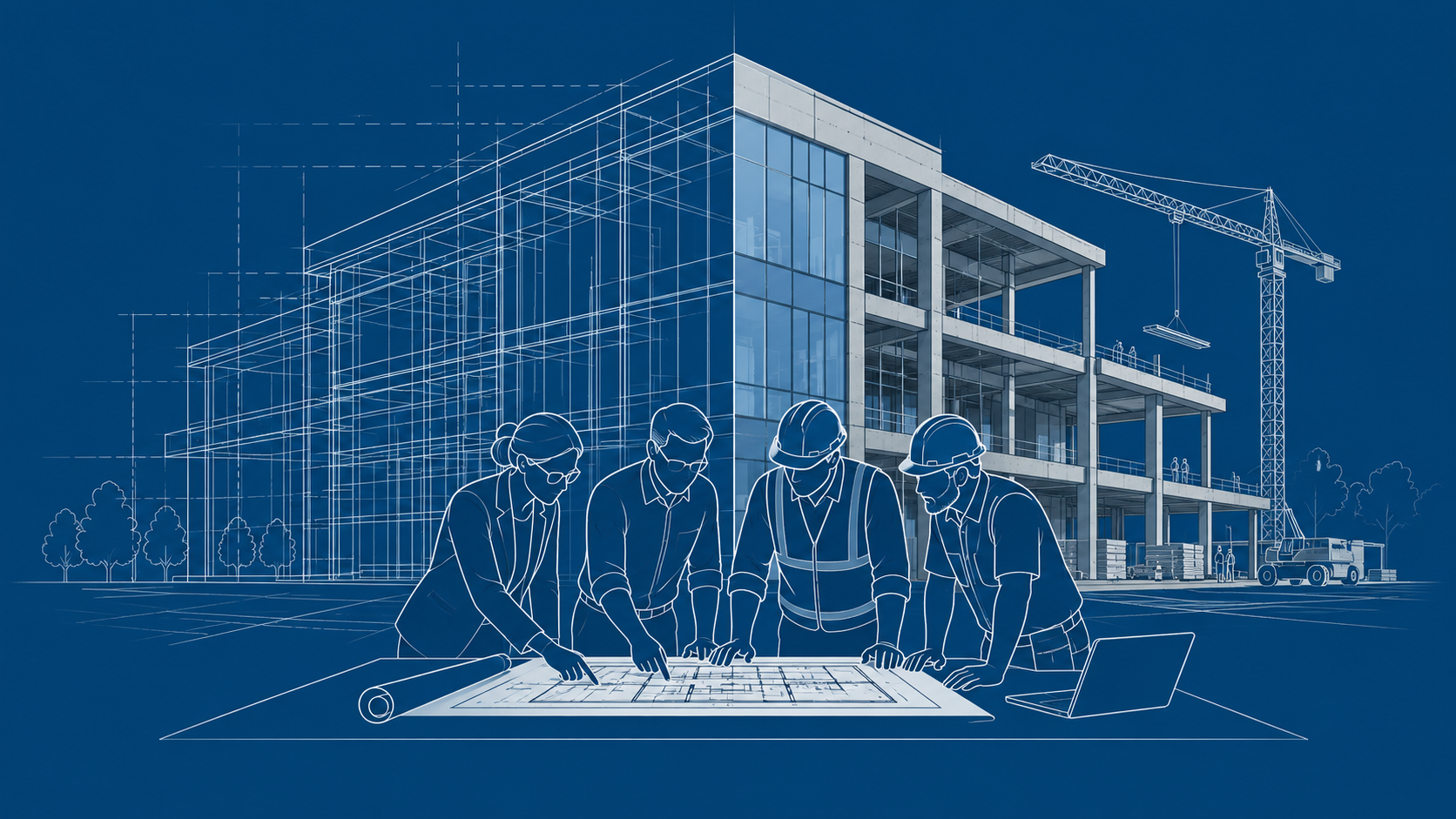
Group PMX CEO Michael Giaramita explores why early alignment, shared accountability, and strong working relationships are critical to successful design-build delivery.
I did my first design-build project about 50 years ago, right out of school. I liked the delivery method then, and I still do.
When design-build works the way it should, you bring design and construction together earlier. The designer, builder, and owner can make decisions with a better understanding of cost, schedule, constructability, and design intent.
But as design-build has become more common, I see something happening more often: firms that may never have worked together before are suddenly teaming up for major pursuits.
I describe it this way: They’re getting married before they date.
A contractor needs a designer. A designer needs a builder. They find the right qualifications, put a team together, pursue the work, and, if they’re successful, must now deliver a major project together.
The contract says they’re one team. That doesn’t mean they know how to work as one.
A Contract Doesn’t Create Alignment
Integration is supposed to be one of the biggest advantages of design-build. But you don’t get integration just by changing the contract.
Every organization and the people come to the table with its own culture, processes, priorities, and ways of making decisions.
Designers are focused on the integrity of the design. Contractors are thinking about how to build it, what it will cost, how long it will take, and what can actually be procured. Specialty trades bring another level of practical knowledge about fabrication and installation.
All of those perspectives are valuable. The problem comes when they stay separate and not aligned.
On a traditional project, it’s easy for people to retreat to their contractual corners when something goes wrong. Design-build is intended to reduce those barriers. But if everybody brings the same old behaviors into the new delivery model, we haven’t accomplished much.
That’s why alignment has to start early.
Don’t Wait Until You Win to Figure Out How You’ll Work Together
When firms are considering a design-build partnership, qualifications and experience obviously matter.
But I’d ask some other questions, too.
How are we going to make decisions together?
What happens when the design starts moving beyond the budget?
How do we address a constructability issue without turning it into a fight between design and construction?
How quickly can we make decisions when the schedule doesn’t give us much time?
Who really needs to be involved?
And one of the most important questions: Do the people who will actually deliver the project know one another?
Senior executives may put the teaming agreement together. They’re not necessarily the people who will spend the next several years solving problems together.
The delivery team needs to start building those relationships early.
You don’t need everyone to think alike. In fact, you shouldn’t want that. You need different expertise and different points of view.
But everybody does need to understand what the team is trying to accomplish and how they are going to work together to get there.
Start With a Shared Definition of Success
I’ve spent a lot of my career thinking about what makes project teams successful. That’s where our One Team. Shared Success. philosophy came from.
The idea is simple: if everybody defines success differently, it’s very difficult to operate as one team.
On a design-build project, design quality can’t belong only to the designer. Cost can’t belong only to the contractor. Constructability isn’t someone else’s responsibility. Neither is the schedule.
The owner hired one team to deliver one project.
That doesn’t erase individual responsibilities. It means those responsibilities have to connect.
The best teams I’ve worked with don’t spend their first energy asking, “Whose fault is this?”
They ask, “What do we need to do to solve it?”
That’s a much better place to start.
Create One Record of Truth
Alignment also depends on information.
At Group PMX, we’ve always placed a strong emphasis on systems. One principle I believe in strongly is maintaining a single record of truth.
People should know where the current information resides and be able to trust what they find there. That matters on every project, but it becomes especially important in design-build.
The design is evolving. Cost information is changing. Procurement decisions are being made. Field conditions are being identified. The schedule is moving. One decision can affect several other parts of the project very quickly.
If the designer is working from one set of information, the contractor from another, and the owner from something else, you’re creating problems before anybody gets to the field.
Technology helps, but this isn’t really a technology issue.
It’s discipline.
Agree on where information resides. Agree on how decisions are documented. Agree on how changes move through the team.
Then stick to it.
Keep Design Connected to Construction
I also believe strongly in keeping architects and engineers connected to what’s happening in the field.
I want the people who designed the work to see how the work is actually being built.
A question addressed while the work is happening is usually much easier to solve than a problem discovered after the next trade has covered it up. It also changes the conversation.
When the designer, contractor, CM, and trade are standing together looking at the same condition, everybody has the same problem in front of them. The designer sees how the detail is being executed. The contractor gains a better understanding of the design intent. The trade can explain what is happening at the installation level.
That’s what integration should look like.
Alignment Doesn’t Mean Everybody Agrees
A well-aligned design-build team isn’t a team that never disagrees.
You want people to challenge ideas.
You want a contractor to say when something will be difficult or expensive to build. You want the designer to protect an important design requirement. You want the trade contractor to speak up when something in the field won’t work as everyone expected.
The issue is what happens after the disagreement.
Does everybody become positional?
Do people start documenting why the problem is someone else’s?
Or does the team get the right people together, understand the issue, and make a decision?
I’ve seen projects spend an enormous amount of time arguing over responsibility while the problem itself sits there waiting to be solved.
That doesn’t help the project.
Solve the problem. Keep the project moving. Design-Build Needs a Design-Build Culture
I’m still a believer in design-build.
Done well, it gives us an opportunity to bring design and construction knowledge together earlier, make better decisions and move projects forward more efficiently.
But the delivery method doesn’t do the work for us.
A teaming agreement can put firms together.
A contract can establish responsibility.
An organization chart can show who reports to whom.
None of those things automatically creates trust, communication or shared accountability.
People do that.
So before you go to the altar, spend some time dating.
Learn how your partner thinks. Get the people who will actually deliver the project together. Establish the systems. Talk about how you’re going to handle the difficult decisions before those decisions arrive.
Because once the project starts, the owner isn’t interested in whether the problem belongs to the designer or the builder.
The owner is counting on one team.
Frequently Asked Questions: What Design-Build Teams Should Know
What should firms consider before forming a design-build team?
Technical qualifications and relevant project experience are important, but they aren’t enough. Firms should also consider how they will make decisions together, manage information, address cost and constructability issues, resolve disagreements and connect the people who will actually deliver the project.
When should design-build team alignment begin?
Before the project starts—and ideally before the pursuit is complete. The earlier the team establishes expectations, working relationships and decision-making processes, the less time it will spend figuring those things out under the pressure of project execution.
What role does the owner play in creating an aligned design-build team?
The owner helps establish the conditions for alignment by clearly communicating priorities, making timely decisions and expecting the team to operate around the overall project outcome. The owner or owner’s representative can also help keep discussions focused on solving the problem rather than protecting individual organizational interests.
What are the warning signs that a design-build team isn’t operating as one team?
Listen to the language. If problems repeatedly become “the designer’s issue,” “the contractor’s issue” or “the owner’s issue,” that’s a warning sign. Separate information, delayed decisions, recurring redesign, unresolved constructability concerns and defensive behavior are other indications that contractual integration hasn’t become real team integration.
About the Author
Michael Giaramita is the CEO and Managing Principal of Group PMX, where he leads the firm’s strategic vision and client-focused culture. A recognized thought leader in project, program, and construction management, he has guided complex capital projects across transportation, aviation, healthcare, higher education, and infrastructure. Michael is the creator of Group PMX’s “One Team. Shared Success.℠” philosophy and the author of It’s All About Your Team, which reflects his commitment to collaborative leadership and exceptional project delivery.
Take your next project
to new heights.
Wherever you are with your next project, we’ll help you move forward, faster than ever.